
DJI Mavic 3 Pro Review
When DJI first launched the Mavic 3 Pro, it immediately turned heads. A drone with three cameras? For creators who’ve always wanted cinematic versatility in one compact machine, this was a dream come true. Now, after extended testing and countless user reviews, it’s clear — the Mavic 3 Pro isn’t just another upgrade; it’s the most advanced prosumer drone DJI has ever built.
Design and Build Quality
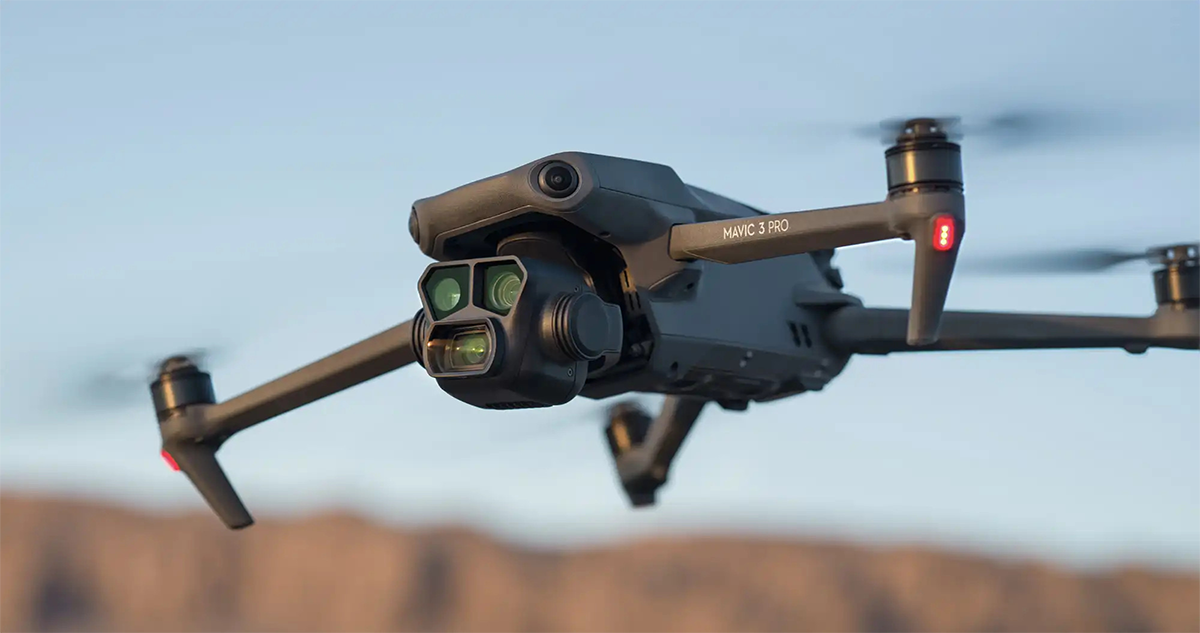
At first glance, the Mavic 3 Pro looks familiar — the same foldable design that made DJI’s Mavic line famous. But look closer, and you’ll see where it stands apart. The triple-lens camera system mounted on a 3-axis gimbal gives it a distinctive, professional profile.
Despite its solid 958-gram weight, the drone feels surprisingly portable once folded (231 × 98 × 95 mm). It fits comfortably in a small backpack, though it’s not as travel-light as DJI’s Mini series. Build quality is exceptional — sturdy arms, premium materials, and precise tolerances. Even the gimbal cover feels improved over earlier versions.
In windy conditions, stability is excellent. The drone’s aerodynamic design and weight help it stay steady where lighter models might drift. The gimbal remains smooth in motion, though a few pilots have noted minor horizon tilt during fast turns — nothing deal-breaking, but worth recalibrating occasionally.
Camera System: A True Game Changer
This is where the Mavic 3 Pro earns its name. DJI equipped it with a triple-camera setup, and each lens serves a distinct creative purpose:
- Main Wide Camera (Hasselblad 4/3″ CMOS, 20 MP)
- 24 mm equivalent focal length
- Adjustable aperture from f/2.8 to f/11
- Dynamic range of roughly 12.8 stops
- Medium Telephoto (1/1.3″ CMOS, 48 MP, 70 mm equivalent)
- 3× optical zoom
- Perfect for mid-range compositions
- Long Telephoto (1/2″ CMOS, 12 MP, 166 mm equivalent)
- 7× optical zoom
- Up to 28× hybrid zoom
All three lenses can record up to 5.1K video, with D-Log, H.265, and 10-bit color support. The footage is crisp, rich, and ready for post-production. Compared to previous Mavic 3 models, the Pro offers noticeably more framing options without compromising quality.
Flight Performance
DJI’s engineering really shines here. The Mavic 3 Pro feels silky-smooth in the air — agile but confident. With a maximum advertised flight time of 43 minutes, real-world tests usually yield about 30–32 minutes, which is still impressive given the heavier payload.
The OcuSync 3+ transmission system maintains a stable HD feed at long ranges with minimal interference. It’s not DJI’s very latest transmission protocol, but it remains rock-solid for professional use. Wind resistance is rated at 12 m/s (around 27 mph), and the drone holds position well even in gusty conditions.
Obstacle avoidance is handled by omnidirectional sensors, giving pilots near-360° awareness. Combined with APAS 5.0 (Advanced Pilot Assistance System), it automatically plans safe routes around obstacles during autonomous flight.
Software and Intelligent Features
As expected, the DJI Fly app delivers an intuitive experience. Even beginners can get airborne in minutes, though this drone’s potential truly shines with advanced use.
Included smart modes:
- FocusTrack for dynamic subject tracking.
- MasterShots for quick, cinematic sequences.
- QuickShots for social-media-ready clips.
- Waypoint Flight for precise route planning and repeatable aerial moves.
One of the most appreciated features is the AR Home Point, which visually marks your take-off location on-screen — a lifesaver for long-range flights.
Switching between the three cameras is seamless, although some users report slight lag on the standard DJI RC controller. The more powerful DJI RC Pro eliminates most of that delay, at a premium price.
Firmware updates over time have improved responsiveness, camera transitions, and overall stability.
Battery and Charging
The battery system is shared with other Mavic 3 models, which is great for existing owners. Each 5000 mAh battery charges in roughly 96 minutes using the standard charger or faster with the Fly More combo’s hub.
In typical conditions, expect about 30 minutes of safe flight time before reaching the return-to-home threshold. Intelligent flight batteries automatically discharge for storage safety — another small but thoughtful DJI touch.
Image and Video Quality: Real-World Results
In practice, the Mavic 3 Pro’s footage looks nothing short of professional. The main Hasselblad lens captures cinematic 5.1K video with outstanding sharpness and minimal rolling shutter. Even when panning quickly, motion remains smooth.
Color rendition in D-Log and HLG is accurate and flexible for grading. The medium telephoto lens adds depth and compression perfect for storytelling — faces, vehicles, and architecture look more dramatic. The telephoto excels in well-lit conditions, capturing details from hundreds of meters away that smaller drones can’t approach.
Still photographers will love the RAW support across all cameras. The files are flexible and clean, with low noise even at moderate ISO levels.
Compared side-by-side, the Mavic 3 Pro clearly outperforms consumer drones like the Mini 4 Pro and Air 3, especially in low light and dynamic range.
Strengths
✅ Triple-camera versatility — wide, medium, and telephoto options without swapping lenses.
✅ Hasselblad image quality — natural color and wide dynamic range.
✅ Excellent flight stability and strong wind resistance.
✅ Long battery life for its class.
✅ Professional-grade control feel with intuitive DJI software.
Weaknesses
❌ High price tag — starts around $3,759.99, with Fly More combos exceeding $5,000.
❌ Heavier weight (>900 g) means stricter flying regulations in many regions.
❌ Real-world flight time shorter than advertised.
❌ Minor gimbal horizon tilt possible during aggressive maneuvers.
❌ OcuSync 3+ isn’t the newest DJI transmission tech, though still very reliable.
Who Should Buy the Mavic 3 Pro
This drone is built for creators who take aerial content seriously — filmmakers, travel vloggers, real-estate videographers, or photographers who demand premium optics and full manual control.
If you’re a casual flyer, the Mavic 3 Pro may feel like overkill. DJI’s Air 3 or Mini 4 Pro offer outstanding image quality at lower cost and with fewer flight restrictions. But for professionals who want the most flexible drone camera system available today, the Mavic 3 Pro is worth every penny.
Value and Verdict
At nearly $2,800 (and higher for combo kits), the Mavic 3 Pro is a premium investment. But what you get is unmatched versatility: three lenses, top-tier image quality, reliable flight performance, and DJI’s best-in-class ecosystem.
For video professionals, the ability to shoot wide establishing shots, mid-range portraits, and distant telephoto details all from a single flight dramatically improves workflow and creative potential.
If you can justify the cost — and follow your local drone regulations — the DJI Mavic 3 Pro remains the most complete aerial content tool in its class. It’s not just a drone; it’s a flying multi-camera studio.
Final Rating (Based on Real-World Data)
⭐ Overall: 4.8 / 5
📸 Camera Quality: 5 / 5
🚁 Flight Performance: 4.7 / 5
🔋 Battery Life: 4.5 / 5
💰 Value for Money: 4.4 / 5
Verdict: The DJI Mavic 3 Pro stands as the best all-around drone for creators in 2025 — powerful, reliable, and incredibly versatile. If image quality and flexibility are your top priorities, this is the drone to beat.
Top 10 Best Camera Drones 4k+ | DroneScape
